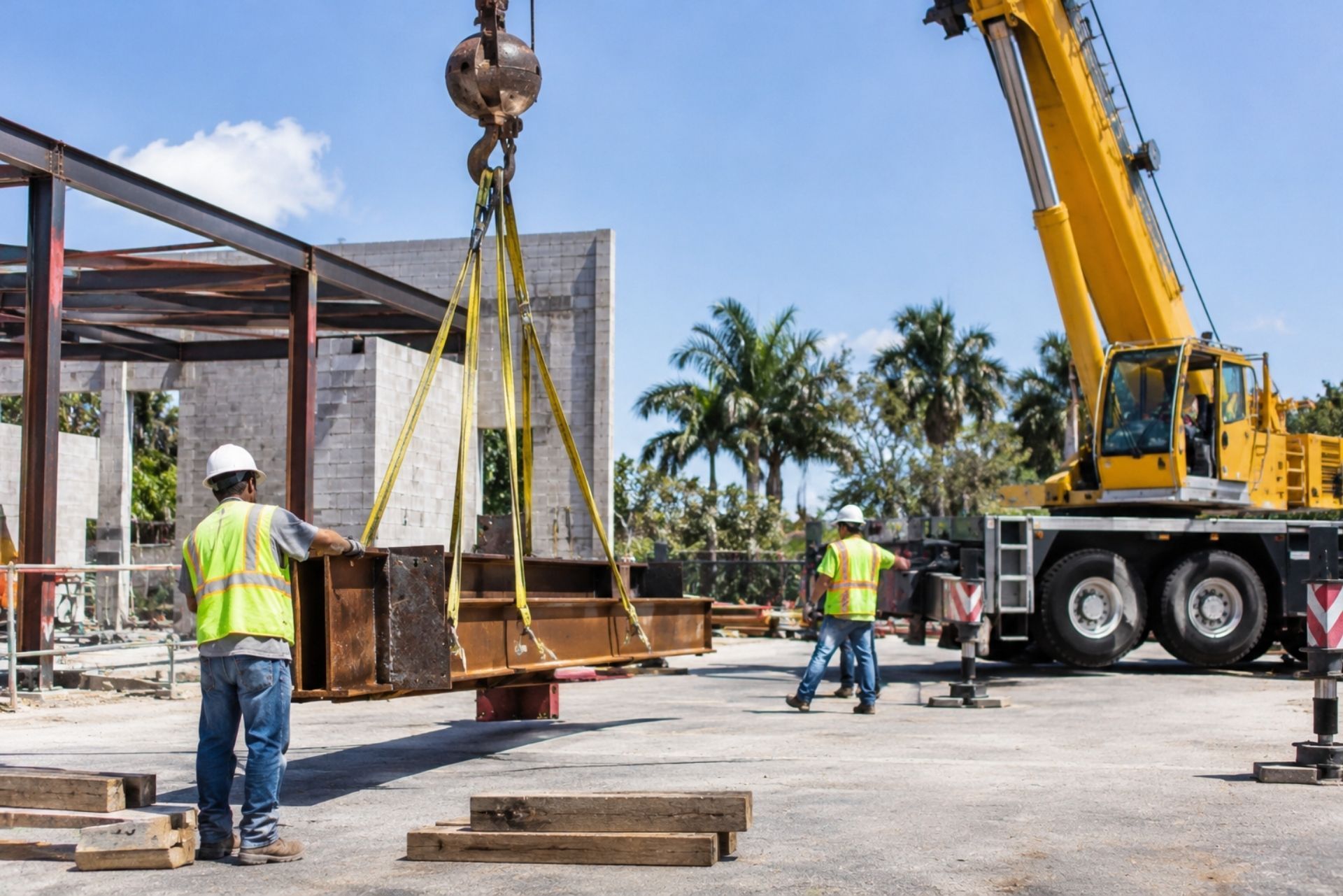
If your crew is lifting a 9-ton rooftop chiller onto a medical office building in Tampa and the sling fails, the client won't care which policy responds. They'll want the unit replaced, the schedule restored, and someone held accountable. Too many Florida rigging contractors find out after the drop that their insurance was never built for that moment.
Rigging is one of the few trades where your business routinely takes temporary control of property worth more than your entire fleet. A single HVAC package, generator, transformer, or piece of imaging equipment can carry a replacement value well into six or seven figures. When that property is in the air, the risk sits with you.
This guide covers riggers liability insurance in Florida for 2026: how the care, custody, or control gap works, what happens with dropped loads, how to set limits and deductibles, which exclusions cause trouble, and what drives your costs. It's written for crane operators, millwrights, machinery movers,
sign installers, and
mechanical contractors who hoist other people's property for a living. You'll see where standard coverage falls short, where specialized policies fill the hole, and what to ask your agent before you sign a contract with a lift-heavy scope.
Protecting Florida's Moving Assets: Why General Liability Isn't Enough
Commercial General Liability (CGL) is designed to pay when your work injures a third party or damages property that belongs to someone else and isn't under your control. It works well for a bystander struck by a falling tool or a parked car dented by your outrigger. It works poorly for the very thing your business exists to handle.
Florida contractors face a specific pressure point here. State licensing rules require public liability and property damage insurance, but those minimums often fall well below what general contractors, hospitals, ports, and developers demand in their bid documents. Meeting the license requirement doesn't mean you're insured for the job you just won.
Consider the typical Florida rigging calendar in 2026:
- Rooftop HVAC change-outs on retail plazas in Orlando and Fort Myers
- Generator and switchgear placement for hospitals and data centers in Miami-Dade
- Boat and yacht lifts at marinas along the Intracoastal
- Structural steel and precast setting on mid-rise projects in Jacksonville
- Industrial machinery relocation for manufacturers in Polk and Hillsborough counties
Every one of those jobs involves property you don't own but temporarily control. That's the precise category a CGL policy is written to exclude. The consequences of a serious incident also extend far beyond the damaged item. After a fatal crane accident in Fort Lauderdale, industry reporting noted that while workers' compensation death benefits are capped, a fatality can
make future insurance much harder to secure and far more expensive. Your loss history follows you into every renewal.
The Care, Custody, or Control Exclusion Explained
The care, custody, or control exclusion (often shortened to CCC) is the single most important phrase in a rigger's insurance file. It explains why so many lifting claims get denied and why a specialized policy exists at all.
Why Standard Policies Deny Claims for Items in Your Possession
A standard CGL form excludes damage to personal property "in the care, custody, or control of the insured." The logic is that liability insurance covers harm you cause to outsiders, not damage to things you've taken charge of. Property you're actively handling is treated as your responsibility, closer to a bailment than a third-party loss.
For riggers, this exclusion triggers constantly. If you damage a client's property, such as an HVAC unit, while hoisting it, the CGL policy typically denies the claim because the property was in your physical control. Once the load is rigged and on the hook, carriers treat it as yours.
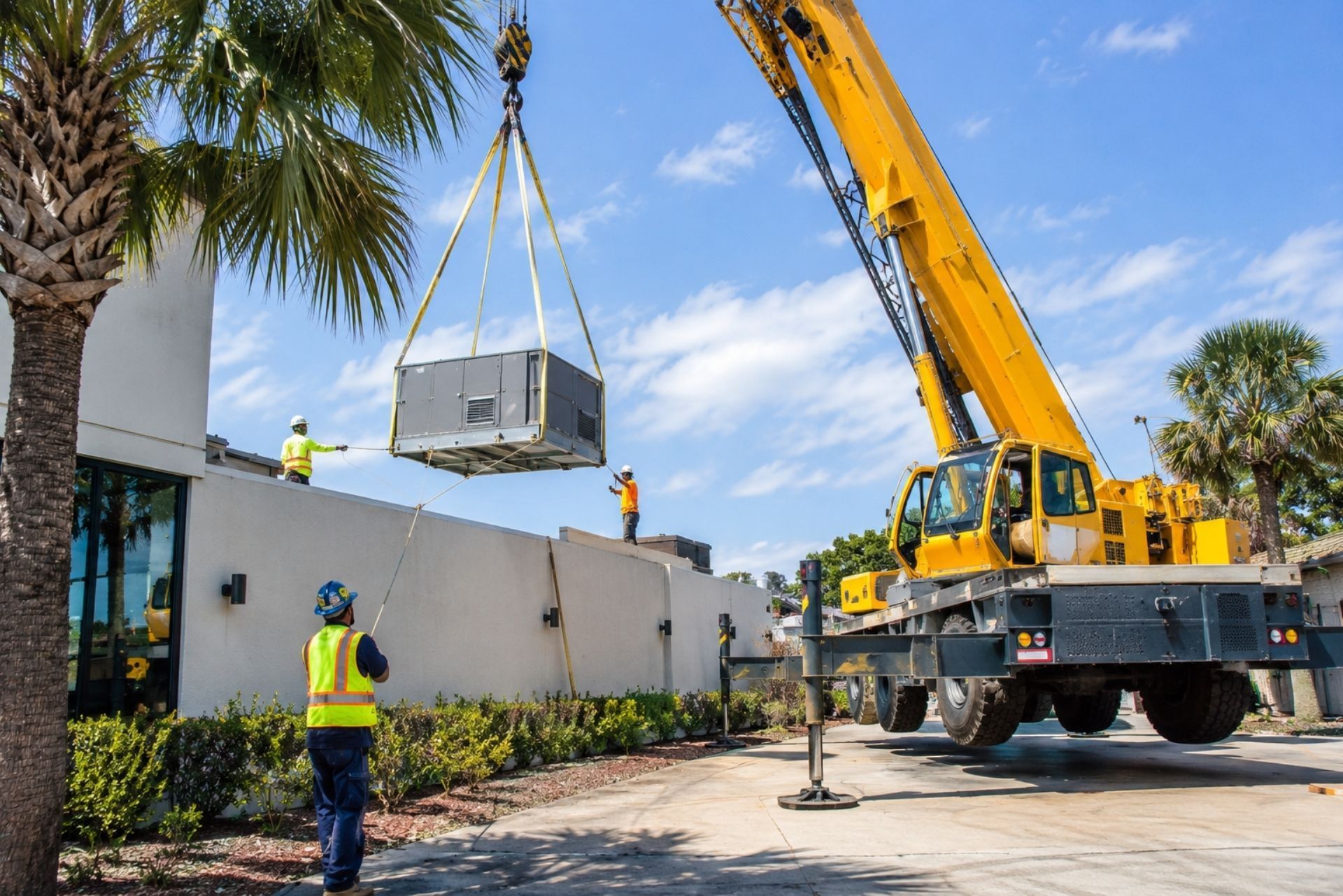
Here's a common scenario. A crew in Sarasota is setting a $210,000 rooftop unit on a grocery store. A shackle pin backs out, the unit swings into the parapet, and both the unit and the roof edge are damaged. The CGL carrier may respond to the parapet damage, since the building wasn't being lifted. The unit itself, the most expensive part of the loss, gets denied under CCC. You're now writing a check or fighting a lawsuit.
Common client mistakes make this worse. Contractors often assume "property damage" coverage means any property, or they rely on a certificate of insurance the GC accepted without reading the exclusions. The certificate shows limits. It doesn't show the CCC language.
Bridging the Gap with Riggers Liability Endorsements
Riggers liability is built specifically to cover the property of others while it's being moved, lifted, lowered, or installed by your crew. It fills the hole the CCC exclusion leaves, covering third-party items such as HVAC units, structural steel, and machinery while they're hoisted or rigged.
You can usually buy this protection two ways:
- As an endorsement to your CGL policy, which modifies the CCC exclusion for rigging operations up to a stated sublimit.
- As a standalone inland marine policy, which typically offers higher limits and broader terms.
Pay close attention to whether the coverage is written on a legal liability basis or a direct damage basis. Legal liability forms pay only when you're found legally responsible, so a loss caused by a hidden manufacturer defect in a lifting lug could go unpaid. Direct damage forms pay regardless of fault, which keeps client relationships intact and avoids an argument over blame while a hospital waits for its generator.
Coverage for Dropped Loads and On-Hook Risks
The dropped load is the claim every rigger fears, and it's where policy wording matters most. "On-hook" coverage refers to protection while the property is attached to the crane, hoist, or rigging gear. Many policies define the coverage period tightly: from the moment the load is attached until it's released at its destination.
That definition creates gaps you should test with your agent. Ask what happens in these situations:
- Ground staging: A transformer sits on cribbing overnight before the lift, and a forklift strikes it. Is it covered before it's on the hook?
- Partial set: The unit is lowered onto the curb, slings are slack but still attached, and a storm shifts it. Does coverage continue?
- Skidding and rolling: Machinery moved on rollers or air skates in a Lakeland plant isn't technically "hoisted." Some forms exclude this unless rigging is defined broadly.
- Transit between points: Moving a load from a laydown yard to the pick point may fall under motor truck cargo instead.
A dropped load often damages more than the load itself. Picture a 30,000-pound precast panel slipping during a set in downtown St. Petersburg. The panel cracks, it strikes a delivery truck, and debris damages the adjacent building facade. Riggers liability may cover the panel. Your CGL may cover the truck and facade. If a worker is hurt, workers' compensation applies. You need all three policies coordinated so nothing falls between them.
Large crane failures show how far the damage can travel. Broward County is pursuing claims against a construction team after a 2024 crane collapse, with related claims in the case
exceeding $50 million for structural damage to public infrastructure. That kind of loss tests every layer of a contractor's program, including umbrella coverage.
Policy Limits, Deductibles, and Florida Market Costs
Getting the limit and deductible right is where most Florida riggers either overpay or leave themselves dangerously exposed. The goal is matching coverage to your real lift values, not picking a round number because a competitor did.
Determining Appropriate Limits Based on Cargo Value
Start with your single largest lift, not your average job. Your riggers limit should cover the full replacement value of the most expensive item you'll handle during the policy year, plus freight and reinstallation costs.
A practical framework:
- Light commercial rigging (sign installation, small rooftop units): a $100,000 to $250,000 per-occurrence limit is a common starting point.
- Mechanical and HVAC contractors handling large packaged units or chillers: consider $500,000 or more.
- Heavy machinery movers and crane operators handling generators, transformers, MRI machines, or turbines: $1,000,000 and up, with project-specific increases for unusual lifts.
Here's the math on a shortfall. Say you carry a $250,000 riggers limit and drop a $400,000 backup generator at a Miami data center. After a $10,000 deductible, the policy pays $240,000. You owe the remaining $160,000, plus whatever the client claims for delay. Many carriers will issue a per-project limit increase for a single high-value lift, which is far cheaper than buying a year-round limit you rarely need.
Factors Influencing Florida Insurance Premiums
Specific premium figures vary too widely by carrier, operation, and loss history to quote responsibly. What we can tell you is which factors underwriters weigh most heavily on Florida rigging accounts:
- Maximum lift value and frequency of high-value picks
- Crane capacity and ownership, including whether you rent operated or bare equipment
- Loss history, especially dropped load or crane incidents within the past five years
- Operator certification and documented lift planning for critical picks
- Wind exposure, since coastal work and hurricane season raise the odds of wind-related incidents
- Deductible choice, where higher deductibles lower premium but increase your out-of-pocket risk
Deductibles on riggers coverage are often meaningfully higher than on your CGL. A $5,000 or $10,000 deductible is common for mid-size operations, and some carriers apply a percentage deductible on high-value lifts. Choose a figure you could pay twice in one year without straining cash flow.
Comparison: General Liability vs. Riggers Liability Coverage
The two policies are complementary, not interchangeable. Your CGL protects you from claims involving outsiders and their property. Riggers coverage protects the specific item you're handling. Most contract disputes start when a contractor treats one as a substitute for the other.
| Coverage Feature | General Liability (CGL) | Riggers Liability |
|---|---|---|
| Client's load while hoisted | Usually excluded (CCC) | Covered |
| Bystander injuries | Covered | Not covered |
| Damage to nearby buildings | Covered | Usually not covered |
| Third-party vehicles struck by debris | Covered | Usually not covered |
| Fault requirement | Legal liability required | Depends: legal liability or direct damage |
| Typical limit basis | Per occurrence and aggregate | Per occurrence, often per lift |
| Satisfies FL license requirement | Yes | No, supplemental |
| Required in many lift-heavy bids | Yes | Increasingly yes |
One thing to keep in mind: some project owners now write the riggers requirement directly into the subcontract, specifying a minimum limit and naming the owner as loss payee. Read the insurance exhibit before you price the job. If you need to buy a project limit increase, that cost belongs in your bid, not in your margin after the fact.
Here's what that means for you in practice. A good Florida program for a rigging contractor typically includes CGL, riggers liability, commercial auto, workers' compensation, equipment coverage for your own cranes and gear, and an umbrella. Each one answers a different question after a loss.
Buying riggers coverage doesn't end the conversation. Even specialized policies carry exclusions that can turn a covered drop into a partial or denied claim. These are the ones that cause the most disputes.
Loss of Use and Consequential Damage Exclusions
Many riggers policies pay to repair or replace the damaged item and nothing more. They exclude the business losses that follow. That gap can dwarf the physical damage.
Picture a hospital in Gainesville waiting on a replacement imaging unit after your crew drops the original. The equipment may be replaced within the limit. The hospital's lost procedure revenue over eight weeks of downtime, however, could become a separate claim against you. If your riggers form excludes loss of use, you're looking to your CGL, which may also push back because the underlying damage involved property in your control.
Ask specifically whether the policy covers:
- Expediting expenses to rush a replacement
- Re-rigging and second lift costs
- Client downtime or loss of use
Distinguish insured losses from maintenance issues too. If a rooftop unit fails because its mounting rails were corroded before you touched it, carriers will treat that as pre-existing wear rather than a rigging loss. Photograph and document load condition before every pick.
Overloading and Improper Rigging Limitations
Carriers expect you to follow manufacturer load charts and accepted rigging practice. Policies frequently exclude or limit coverage for loads exceeding rated crane capacity, use of uncertified or damaged slings, and lifts performed in winds beyond the equipment's stated limits.
This matters because Florida's afternoon thunderstorms and summer wind gusts create exactly the conditions underwriters scrutinize. If your lift plan shows you continued a pick while gusts exceeded the crane manufacturer's limit, expect the adjuster to raise it.
Protect yourself with documentation: written lift plans for critical picks, inspection logs for rigging hardware, wind readings recorded at the time of the lift, and operator certifications on file. These records often decide whether a claim gets paid.
Keep claim timing in mind as well. Florida's insurance statutes have changed repeatedly, and in 2026 the Florida Supreme Court held that
new pre-suit notice requirements cannot be applied retroactively to policies issued before the law took effect. Your policy date can affect which rules govern a dispute, so report losses promptly and keep your policy documents organized by term.
Answers to Your Rigging Insurance Questions
Does my general liability policy cover a load I drop? Usually not for the load itself. The care, custody, or control exclusion typically removes coverage for property you're hoisting, though damage to surrounding property may still be covered.
Is riggers liability required by Florida law? No. Florida requires public liability and property damage insurance for licensed contractors, but riggers coverage is typically a contractual requirement set by clients and general contractors.
How much riggers coverage should I carry? Match your limit to the replacement value of your most expensive single lift, plus freight and reinstallation. For occasional high-value picks, ask about a per-project limit increase.
What's the difference between legal liability and direct damage forms? Legal liability pays only if you're at fault. Direct damage pays for covered losses regardless of fault, which helps preserve client relationships.
Will my policy cover a client's downtime after a dropped load? Often not. Many riggers forms exclude loss of use and consequential damages, so ask your agent directly and get the answer in writing.
Does riggers coverage protect my own crane?
No. Your crane and rigging gear need contractors equipment coverage, which is a separate policy.
Making the Right Choice for Your Florida Business
The care, custody, or control exclusion is not a technicality. It's the reason a dropped chiller in Tampa or a damaged generator in Miami can turn from a covered incident into a personal debt. Riggers liability exists to close that gap, but only if the limits match your real lift values and the exclusions don't swallow the coverage.
Before your next renewal or major bid, take these steps:
- Pull your policy forms and confirm whether CCC is modified for rigging operations.
- List your three largest lifts from the past year and compare their values to your current limit.
- Ask whether coverage is legal liability or direct damage, and what triggers on-hook coverage.
- Confirm loss of use, expediting, and re-rigging terms in writing.
- Review bid insurance exhibits before pricing jobs, and include project limit increases in your number.
- Document every critical lift with plans, inspections, and wind readings.
The cheapest time to find a coverage gap is before the load leaves the ground. Sit down with an agent who writes rigging accounts in Florida and walk through your actual jobs, not a generic application.
ABOUT THE AUTHOR: PAUL RAMENTOL
I am the Owner and President of Mesa Insurance Agency. I help individuals and business owners across Florida secure personal and business insurance coverage that supports their needs. My focus is on clear guidance, direct communication, and long-term support without call-center delays or confusion.
Contact Us

Personal Coverage Options
Insurance Built for Everyday Protection
Mesa Insurance Agency provides personal insurance coverage designed to support daily life. Our team reviews risks and coverage needs to help clients secure dependable protection at fair rates.
Dental & Vision Insurance
Coverage that helps manage routine dental and vision care costs.

Business Coverage Options
Insurance Built for Business Protection
Mesa Insurance Agency provides business insurance coverage that helps protect operations, employees, and property. We work with multiple carriers to offer coverage options that support daily business activities and long-term stability.
Commercial Auto Insurance
Coverage for business-owned vehicles, drivers, and accident-related liability exposure.
General Liability Insurance
Protection against third-party injury, property damage, and common business liability risks.
Professional Liability Insurance
Coverage for claims related to professional services, advice, or service errors.
Workers’ Compensation Insurance
Coverage that helps support employees with work-related injuries and medical costs.
Commercial Property Insurance
Protection for buildings, equipment, inventory, and physical business assets.
Errors & Omissions Insurance
Coverage for financial losses caused by mistakes, omissions, or service-related claims.
Industries We Serve
Serving Businesses Across Multiple Sectors
Mesa Insurance Agency works with business owners across Florida to provide insurance coverage that supports daily operations. We understand common risks faced by different industries and help clients secure reliable protection.

Construction and Trades Insurance
Coverage for job sites, vehicles, tools, and workplace risks.

Hospitality Businesses Insurance
Insurance for restaurants, bars, and service-based operations.

Retail and
Commercial Properties
Protection for storefronts, inventory, and customer-related liability.
Our Approach
Insurance Made Easy to Understand
Mesa Insurance Agency provides business insurance coverage that helps protect operations, employees, and property. We work with multiple carriers to offer coverage options that support daily business activities and long-term stability.
Insurance FAQs
Helpful Answers for Florida Clients
Support you can rely on.

What makes Mesa Insurance Agency different?
We are an independent agency with access to multiple carriers. This allows us to offer flexible coverage options.
Clients work directly with licensed agents. Service continues beyond the policy start date.
Do you offer coverage for individuals and families?
Yes. We provide personal insurance for individuals and families across Florida.
Coverage includes auto, home, health, life, and flood insurance. Our team explains each option clearly.
Do you work with small and mid-sized businesses?
Yes. We work with businesses of many sizes and industries.
Our team helps identify risks and secure appropriate coverage. Ongoing service is included.
Can I make changes to my policy later?
Yes. Policies can be updated as needs change.
We assist with coverage adjustments, additions, and removals. Clients can contact us directly for help.
Is flood insurance required in Florida?
Flood insurance is not always required, but it is strongly recommended in many areas.
Standard home insurance does not cover flood damage. Our team can review your flood risk and options.
How do I contact your office?
You can contact us by phone, email, or through our website.
Our team responds promptly during business hours. Support is always available when needed.
From the Blog
Insurance Topics That Matter
Clear answers for common questions.





Client Reviews
Trusted by Clients Across Florida
Mesa Insurance Agency is proud to serve individuals and businesses throughout Florida. Clients choose us for clear communication, responsive service, and reliable insurance support. Their feedback reflects our focus on long-term relationships and consistent service.
Contact Us